
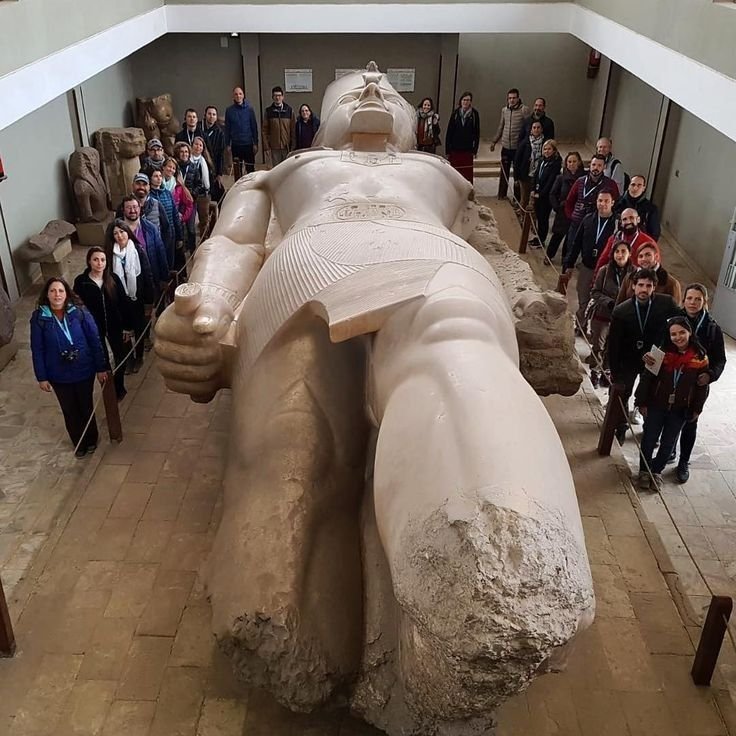
Memphis: The Heart of Ancient Egyptian Civilization
overview
Memphis, also known as Manf or Hut‑ka‑Ptah (“House of the Ka of Ptah”), is one of the oldest and most important cities in ancient Egyptian history. Strategically located on the west bank of the Nile, south of the Delta, Memphis was a political, religious, and commercial hub that played a central role in shaping Egypt’s early civilization.
Founding of Memphis and Its Political Role
According to ancient traditions, King Menes (Narmer) founded Memphis after unifying Upper and Lower Egypt, establishing it as the capital of the Old Kingdom. The city served as a powerful administrative center, overseeing the construction of pyramids and grand temples. Its strategic location near the Nile made it a key point for controlling trade routes and connecting the north and south of Egypt.
Name and Significance
The ancient Egyptian name for Memphis was Men-nefer, meaning “Enduring and Beautiful.” The term “Hut‑ka‑Ptah” highlights the importance of Ptah, the god of craftsmen, architects, and creators, who was considered the city’s protector and patron.
Religion and the God Ptah
Ptah was the local deity, worshiped as the god of craftsmen, sculptors, and engineers. His main temple, Hut‑ka‑Ptah, was the spiritual and cultural heart of the city, where major rituals and festivals took place. Smaller temples dedicated to other deities also dotted the city, reflecting the central role of religion in daily life.
Daily Life, Economy, and Trade
It was a vibrant city with:
- Residential districts and workshops for artisans and craftsmen.
- Centers for industry producing metalwork, woodcraft, pottery, and other goods distributed throughout Egypt.
- A strategic location along the Nile facilitated both domestic and international trade.
- Integration of economic and religious life, as craftsmen supplied temples and royal palaces.
Historical Transformations
Over the centuries,maintained its significance, but its prominence rose and fell depending on ruling powers:
- During the Old Kingdom, it served as the main capital and a center of political and religious life.
- In the Middle and New Kingdoms, its importance declined with the rise of Thebes as the political and religious center.
- Under Persian and Roman rule, Memphis retained symbolic significance but was no longer the major capital.
Notable Landmarks
- Temple of Ptah: The religious heart of the city, hosting grand ceremonies and rituals.
- Royal Necropolises: Nearby Saqqara contains small pyramids and royal tombs, reflecting the city’s wealth and status.
- Craftsmen’s Workshops: Evidence of the ancient Egyptians’ skill in sculpture, pottery, and metalwork.
- Palaces and Residences: Remains of royal palaces and administrative buildings showcase the city’s architectural grandeur.
Cultural and Historical Importance
Memphis was more than just an administrative city; it was a symbol of the birth of the Egyptian state.
- It was a political, economic, and religious center.
- It preserved Egypt’s rich cultural and artistic heritage.
- Its architecture, temples, and religious beliefs inspired generations and reflect the brilliance of ancient Egyptian civilization.
Conclusion
The city remains one of the most remarkable centers in ancient Egyptian history. From its legendary founding by Menes to the majestic Temple of Ptah and the royal necropolises, it offers a complete vision of ancient Egyptian life, religion, and culture. Visitors today can explore the heart of one of the world’s greatest civilizations, witness the ingenuity of its craftsmen, experience its rich spiritual heritage, and immerse themselves in thousands of years of history and tradition. This timeless legacy continues to inspire awe and fascination, connecting modern travelers with the brilliance and grandeur of ancient Egypt.
Explore the Wonders of Memphis, Ancient Egypt!
Step into the legendary city of Memphis and uncover the secrets of ancient Egyptian civilization. Visit the Temple of Ptah, explore royal necropolises, and discover the lives of pharaohs and craftsmen. Experience the magic of thousands of years of history in one unforgettable journey!

Recent Posts

Khan El Khalili: The Heart of Historic Cairo

Saladin Citadel: The Iconic Fortress of Cairo

Dahshur: Explore the Bent and Red Pyramids of Ancient Egypt
Important Tour Information
All Categories
- alexandria
- Aswan
- Cairo
- Cultural Egypt: Discovering the History Behind the Pyramids
- Dive into the Magic of Sharm’s Underwater World
- giza
- Islamic
- Luxor
- Sailing the Nile
- Siwa Oasis
- Siwa’s Simplicity
- Sphinx
- the Desert to the Sea
- The White Desert A Dream Sculpted by Time
- The Wonders of Saqqara
- Top 10 Unforgettable Egypt Tours
- Travel Tips
- Uncategorized
- VIP Tours
- Western Desert Oases