
Abu Simbel Temple: Top Historical Landmark & Sun Alignment Phenomenon of Ramses II
Overview
- Abu Simbel Temple is located on the west bank of the Nile near Aswan, Egypt.
- Built by King Ramses II in the 13th century BCE, Abu Simbel Temple serves as both a memorial for military victories and a religious site for ancient Egyptian gods.
- The temple features massive statues, detailed carvings, and intricate hieroglyphics, illustrating the king’s life, victories, and devotion to the gods.
- Visiting Abu Simbel provides a unique experience combining history, art, religion, architecture, and astronomy.
- The site demonstrates the advanced engineering skills and astronomical knowledge of the ancient Egyptians.
Sun Alignment Phenomenon
- Occurs twice a year: around October 22 and February 22.
- Sunlight enters the main entrance of Abu Simbel Temple and illuminates Ramses II’s face in the sanctuary, while other deity statues remain in shadow.
- The alignment highlights precise engineering and astronomical calculations.
- Symbolically, it demonstrates the king’s divine connection with the gods.
- Tourists from around the world visit Abu Simbel to witness this rare and mesmerizing event.
Architecture and Exterior Design
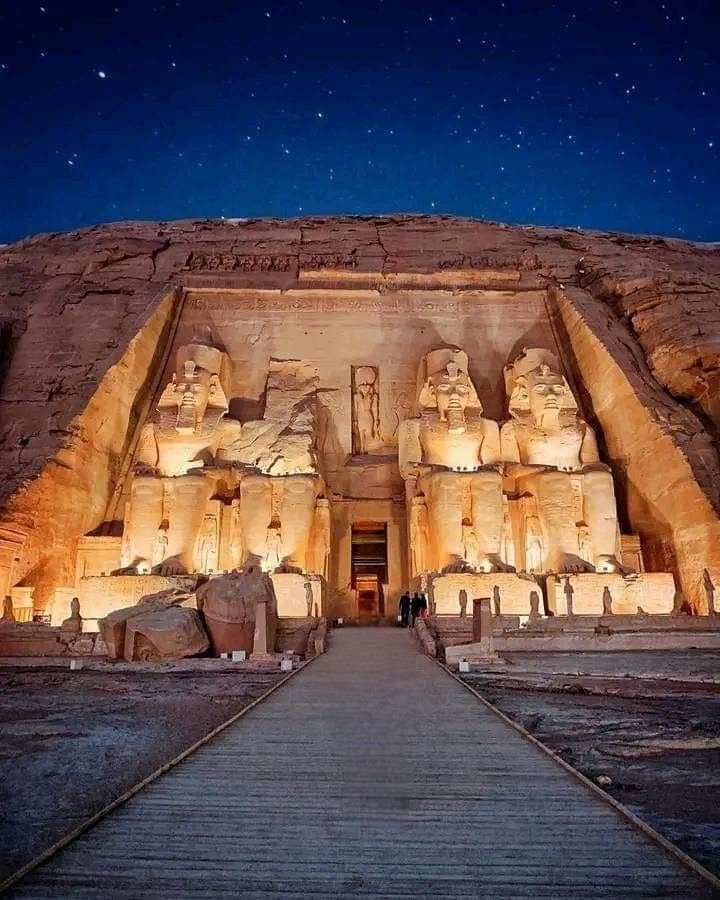
- The temple’s facade features four colossal statues of Ramses II, each standing about 20 meters tall.
- Smaller statues represent members of the royal family, including the queen and children.
- The exterior carvings illustrate military victories, ceremonial events, and the king’s divine status.
- Abu Simbel Temple’s orientation was carefully planned to allow sunlight to illuminate the sanctuary during the two annual events.
Interior and Halls
- Inside, the temple contains grand halls with walls covered in detailed carvings.
- The Sanctuary Hall contains statues of Ramses II and major Egyptian gods such as Amun, Ra, and Hathor.
- The carvings depict religious rituals, offerings, and symbolic events celebrating the king’s reign.
- Abu Simbel’s interior reflects mastery in combining art, religion, and astronomy.
Historical and Religious Importance
- Abu Simbel Temple served as a royal monument emphasizing Ramses II’s power and divine connection.
- The sun alignment reinforced the belief that the king was an intermediary between humans and gods.
- The temple demonstrates the combination of artistry, religion, and engineering, highlighting ancient Egypt’s sophistication.
- Its construction involved relocating massive stone blocks, showcasing the ingenuity of the builders.
Visiting Abu Simbel Temple Today
- Tourists can explore the grand facade, colossal statues, and intricate carvings of Abu Simbel Temple while learning about Ramses II’s victories and life.
- Witnessing the sun illuminating Ramses II provides a rare and unforgettable experience.
- The site includes visitor facilities, guided tours, and informative displays to help understand its historical and cultural significance.
- Planning a visit during the sun alignment dates ensures the most memorable experience.
- Visitors also learn about Egyptian history, architecture, and astronomy through Abu Simbel’s design and inscriptions.
Conclusion
- Abu Simbel Temple is not just a historic monument but a testament to ancient Egyptian innovation in architecture, astronomy, and art.
- Its sun alignment phenomenon adds spiritual and scientific significance, reflecting the remarkable knowledge and skills of the ancient builders.
- Visiting Abu Simbel offers a deep understanding of ancient Egypt’s culture, religion, and technological advancements, making it an essential destination for history enthusiasts and travelers alike.
- Beyond its architectural and astronomical marvels, the temple provides an immersive experience that connects visitors with the daily life, beliefs, and achievements of one of the world’s greatest civilizations. Every hall, carving, and statue tells a story of devotion, power, and artistry, leaving a lasting impression on everyone who explores it.
- Witnessing the grandeur of the temple, along with its serene surroundings near the Nile, allows visitors to appreciate not only the skill of the ancient Egyptians but also the enduring legacy of their cultural and religious practices. The combination of history, art, and celestial alignment makes the experience unforgettable and truly unique.
Ready to experience the magic of ancient Egypt?
Step into the monumental Abu Simbel Temple in Aswan, admire the colossal statues and intricate carvings that tell the story of Ramses II, witness the rare sun alignment phenomenon, and explore the beautifully decorated halls dedicated to Egyptian gods. Discover the rich culture, religious rituals, and artistic mastery of ancient Egypt, and make your visit an unforgettable journey through history!

Recent Posts

November 22, 2025Nouby0 Comments
Khan El Khalili: The Heart of Historic Cairo

November 22, 2025Nouby0 Comments
Saladin Citadel: The Iconic Fortress of Cairo
November 22, 2025Nouby0 Comments
Dahshur: Explore the Bent and Red Pyramids of Ancient Egypt
Important Tour Information
All Categories
- alexandria
- Aswan
- Cairo
- Cultural Egypt: Discovering the History Behind the Pyramids
- Dive into the Magic of Sharm’s Underwater World
- giza
- Islamic
- Luxor
- Sailing the Nile
- Siwa Oasis
- Siwa’s Simplicity
- Sphinx
- the Desert to the Sea
- The White Desert A Dream Sculpted by Time
- The Wonders of Saqqara
- Top 10 Unforgettable Egypt Tours
- Travel Tips
- Uncategorized
- VIP Tours
- Western Desert Oases